Last Updated: November 2, 2026
Quick Summary
A small inground pool works best when you match the type, shape and depth to how you will use the water. Plunge pools run roughly 8 to 12 feet long, narrow lap pools 6 to 8 feet wide, and spools about 10 to 16 feet long. Benches, tanning ledges and lighting add function without extra footprint.
- A tanning ledge is typically 6 to 12 inches deep and can replace deck space.
- Lounging pools usually need roughly 3.5 to 5 feet of depth.
- Keep the pool close to the house to reduce plumbing and deck runs.
- An attached spa lets you heat a small body of water separately.
- Check access, easements and utility locates before designing the pool.
Table of Contents
- 7 Small Inground Pool Ideas That Transform a Tight Backyard
- Small Inground Pool Sizes That Fit Real Yards
- Small Inground Pool Ideas for a Backyard on a Budget
- What Small Inground Pools Cost to Build and Own
- Small Pool With Spa Ideas for Year-Round Use
- Setbacks, Permits, and Site Constraints to Plan For
- Planning Your Small Inground Pool With Sanchez Pools Inc
- Frequently Asked Questions
7 Small Inground Pool Ideas That Transform a Tight Backyard
A small inground pool is not a compromise. It is a deliberate design choice, and a compact footprint can often deliver more usable backyard than a sprawling one.
Below, we walk through seven ideas that work in tight yards, then cover sizes, budget decisions, real cost drivers, and the permit questions most guides skip entirely.
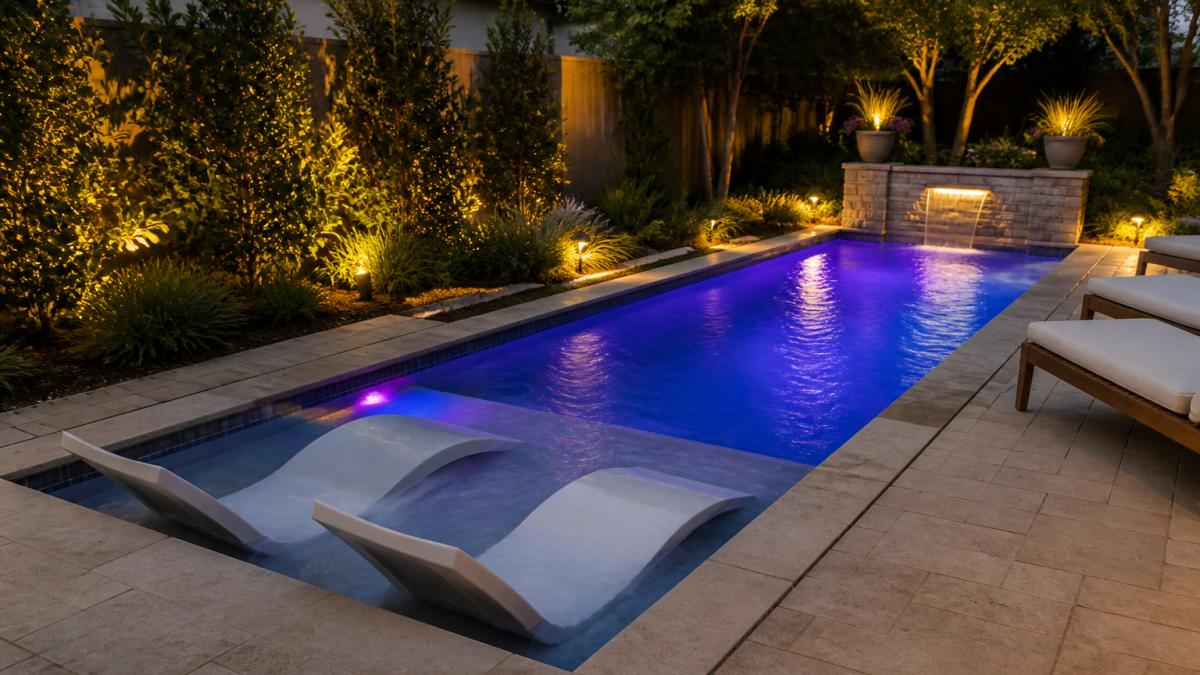
1. Plunge Pools and Cocktail Pools
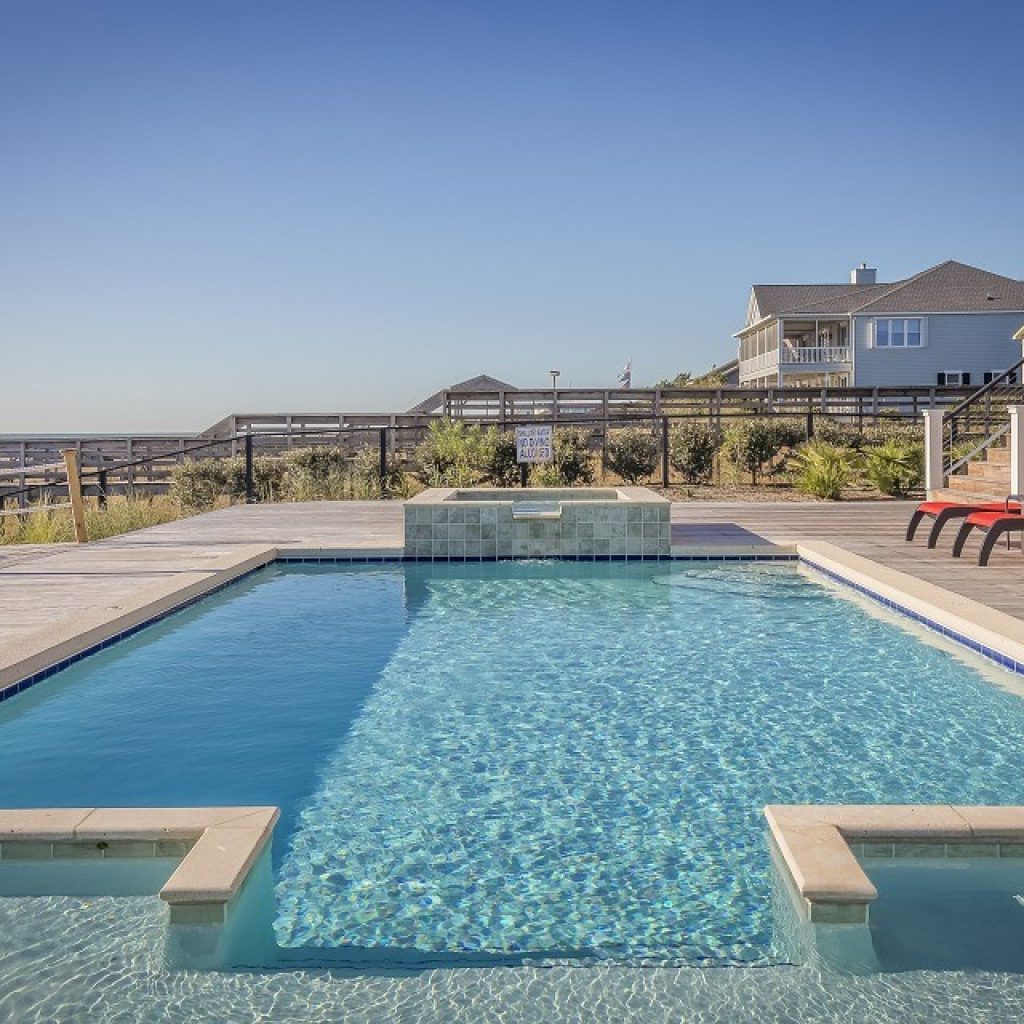
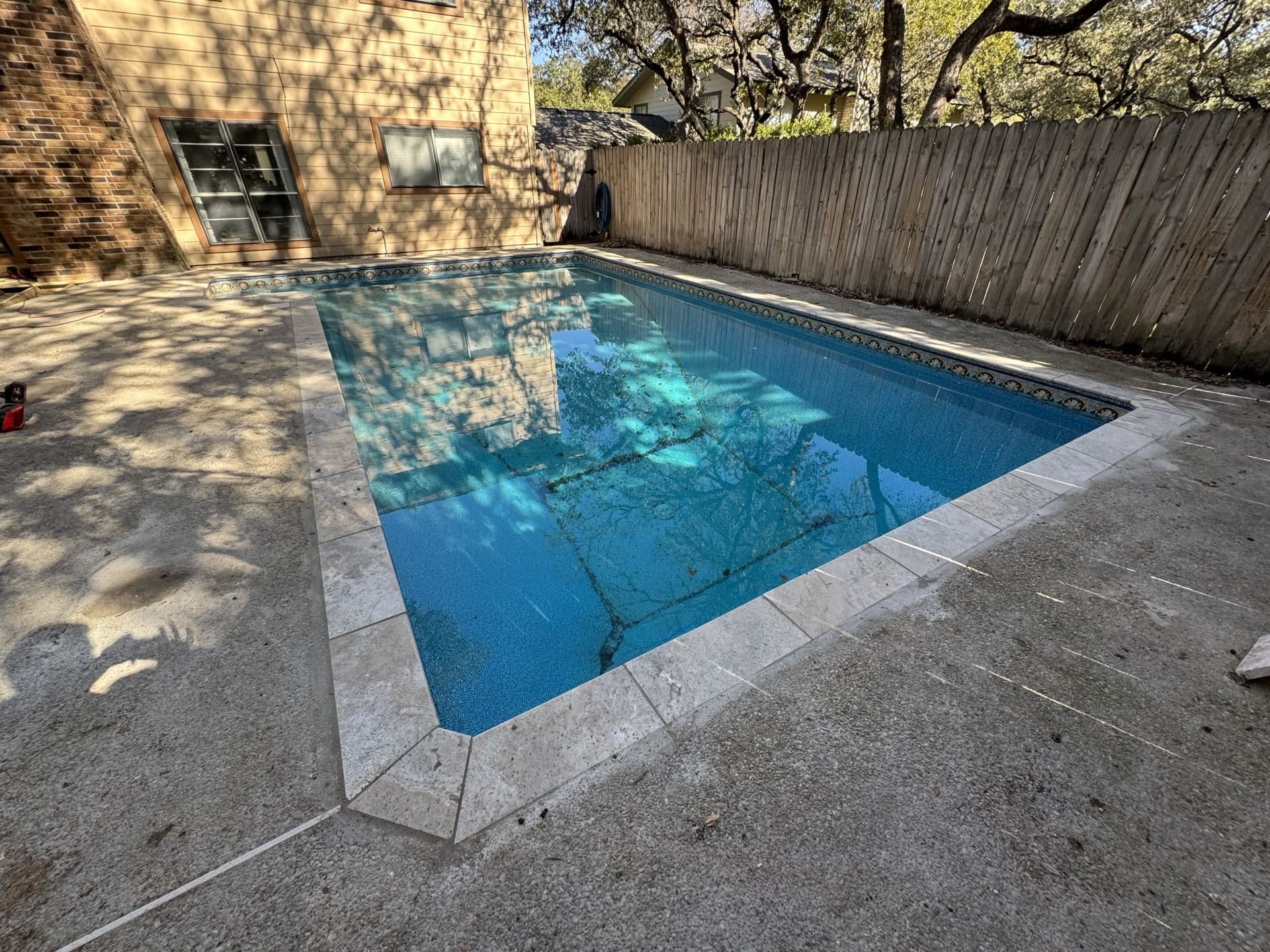
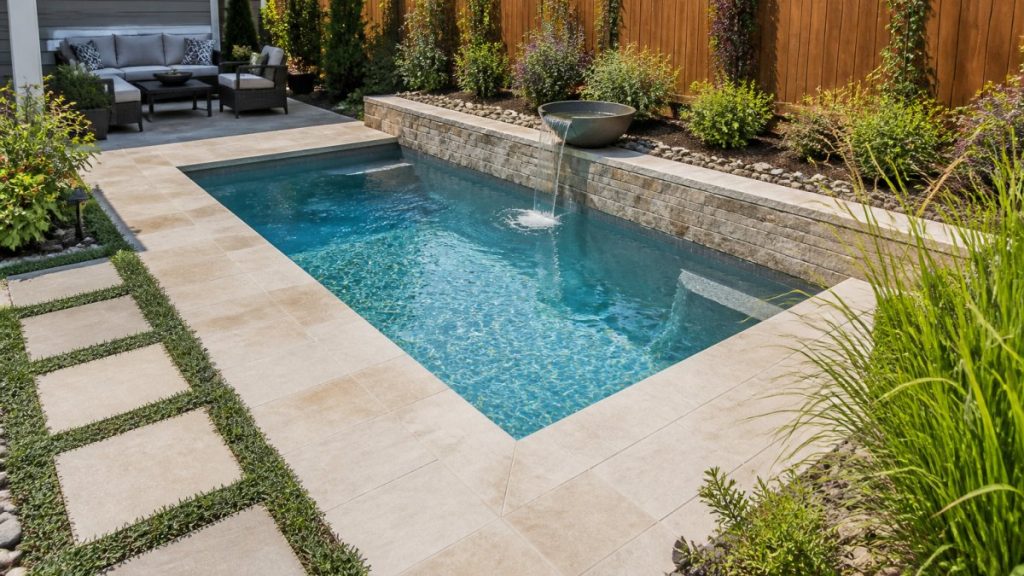
A plunge pool is a small inground pool built for cooling off and standing in, not swimming laps. Most run roughly 8 to 12 feet long and 6 to 10 feet wide, which fits a side yard or a patio corner. A cocktail pool is the same idea with a social purpose: deeper seating, often a bench along one wall, designed for holding a drink rather than doing laps.
2. Geometric, Freeform, and Narrow Pool Shapes
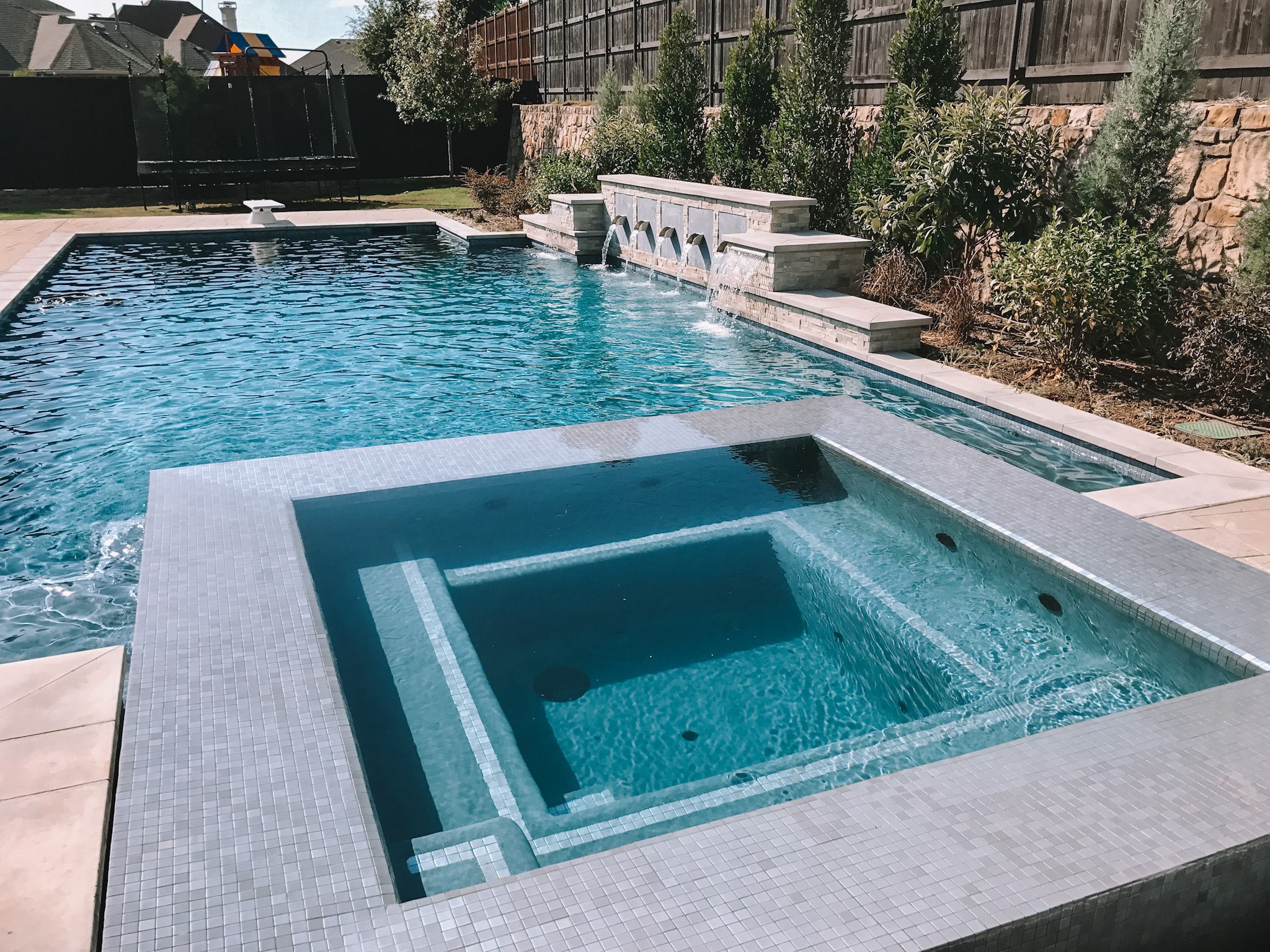
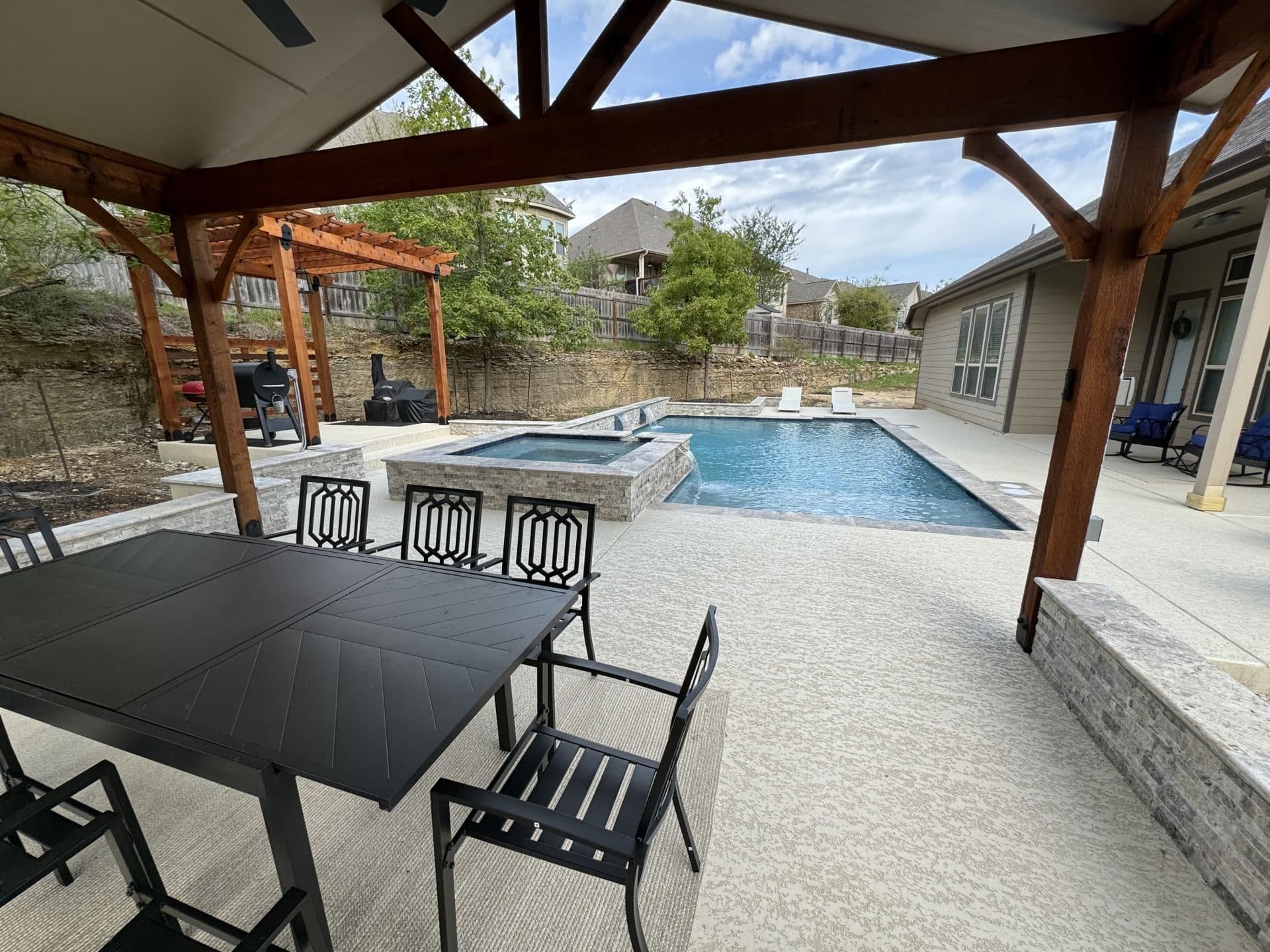
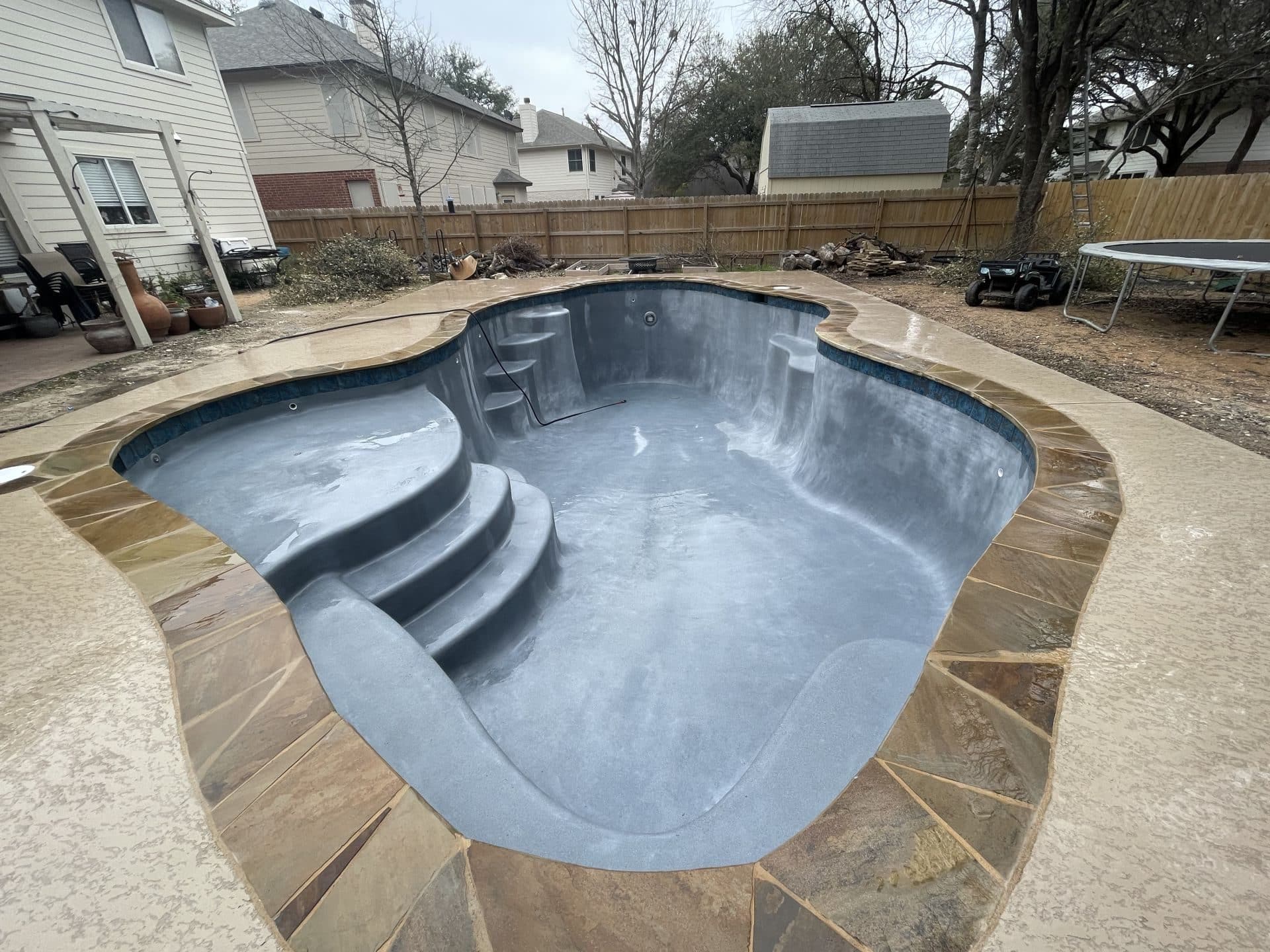
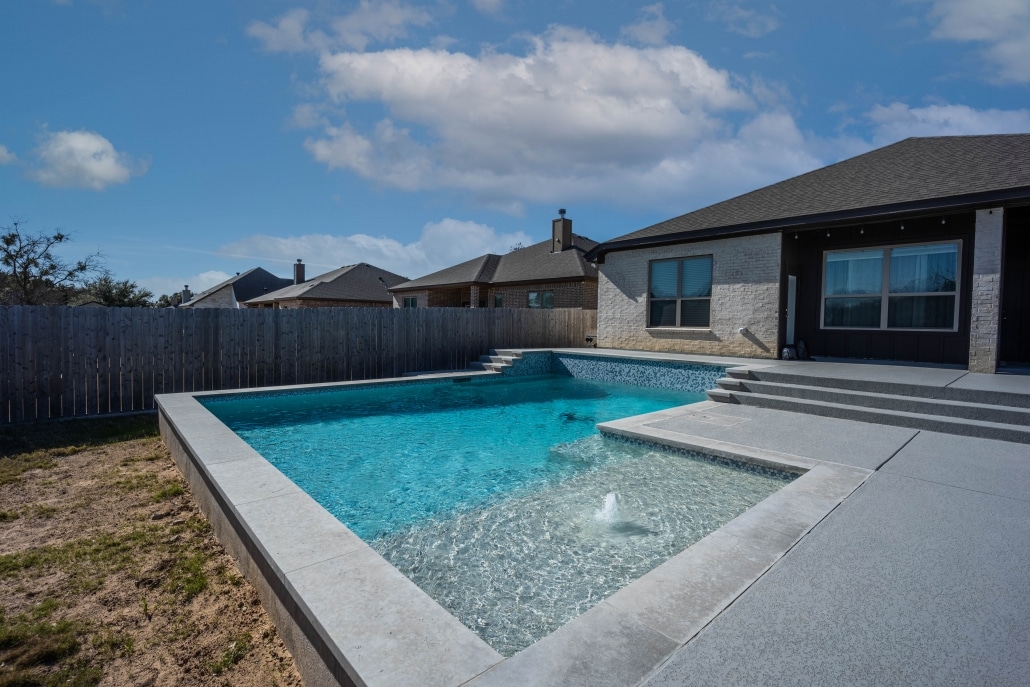
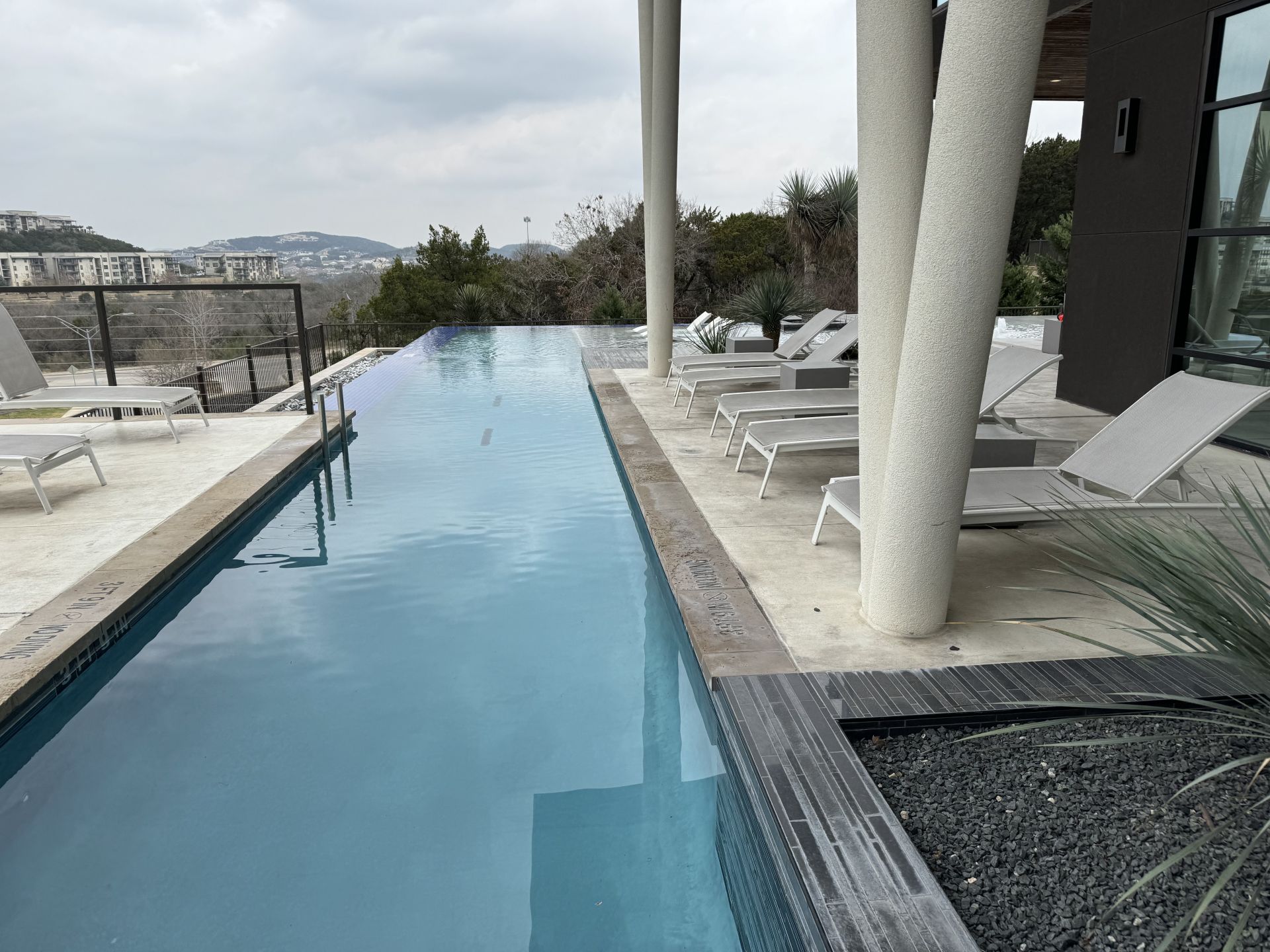
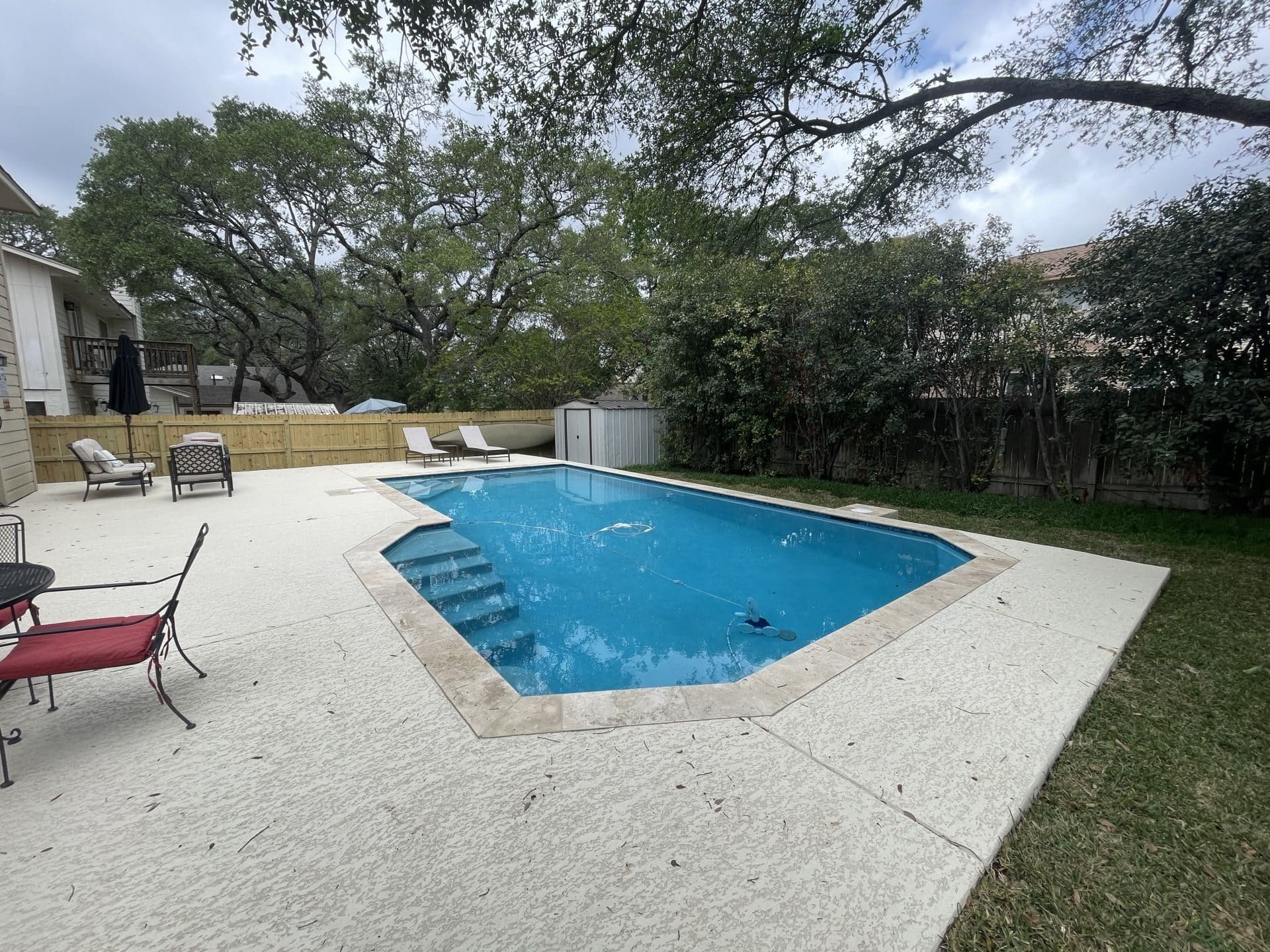
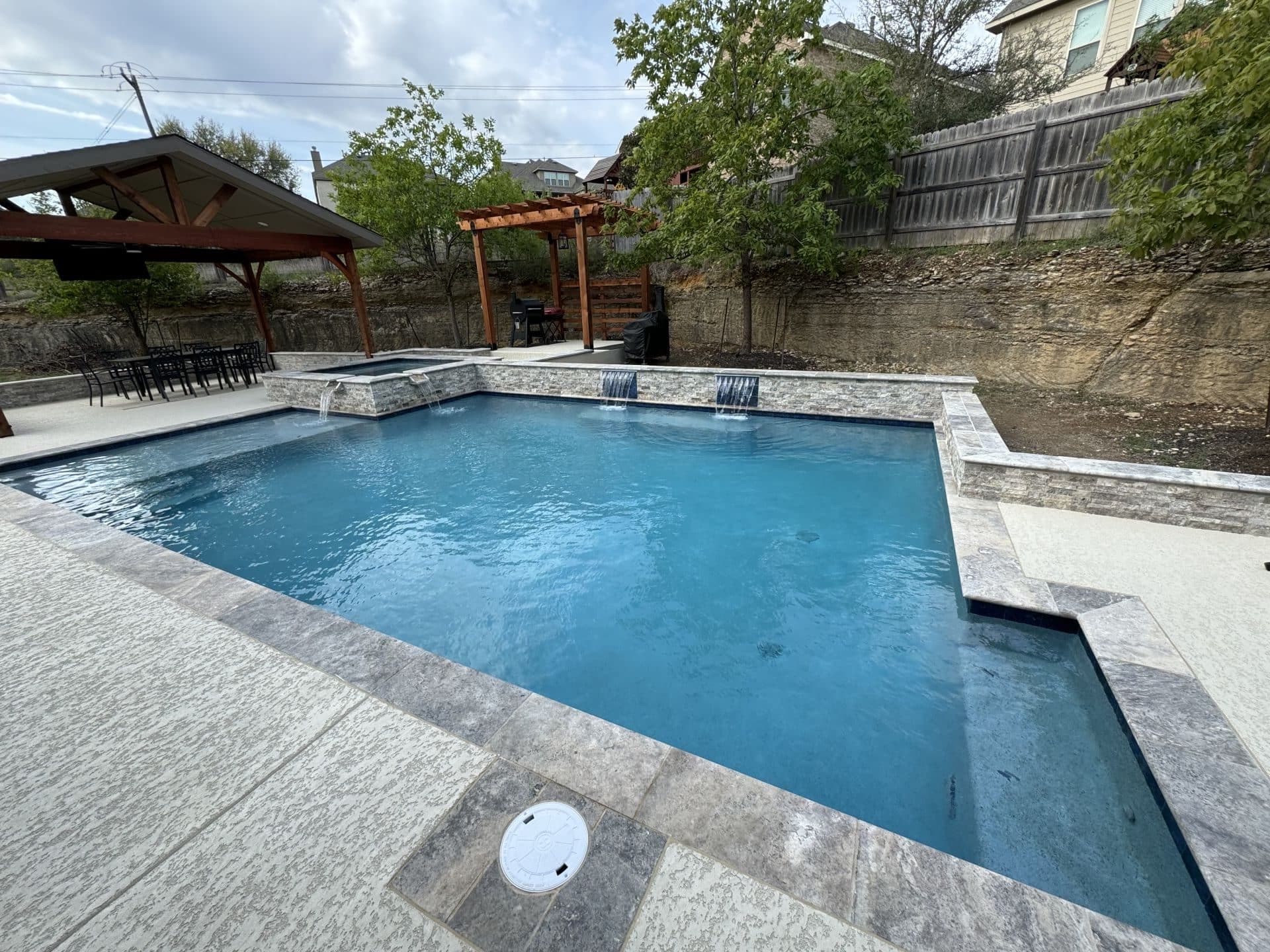
Shape does more work in a small yard than size does. A geometric pool with clean right angles reads as architecture and tucks neatly against a house wall. A freeform pool softens a cramped space with curves that echo planting beds. A narrow pool or lap pool, often 6 to 8 feet wide and 25 to 40 feet long, turns a side strip into something functional.
3. Spools and Swim Spas
A spool combines a pool and a spa in one compact shell, usually 10 to 16 feet long. A swim spa adds a current you swim against, so you get exercise without the length.
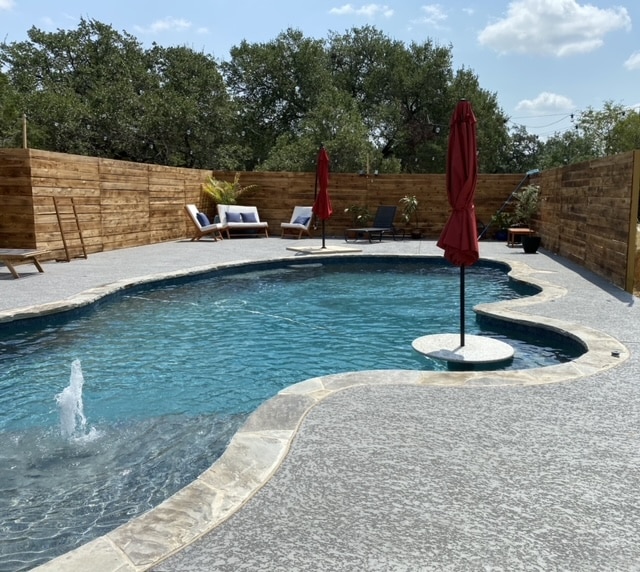
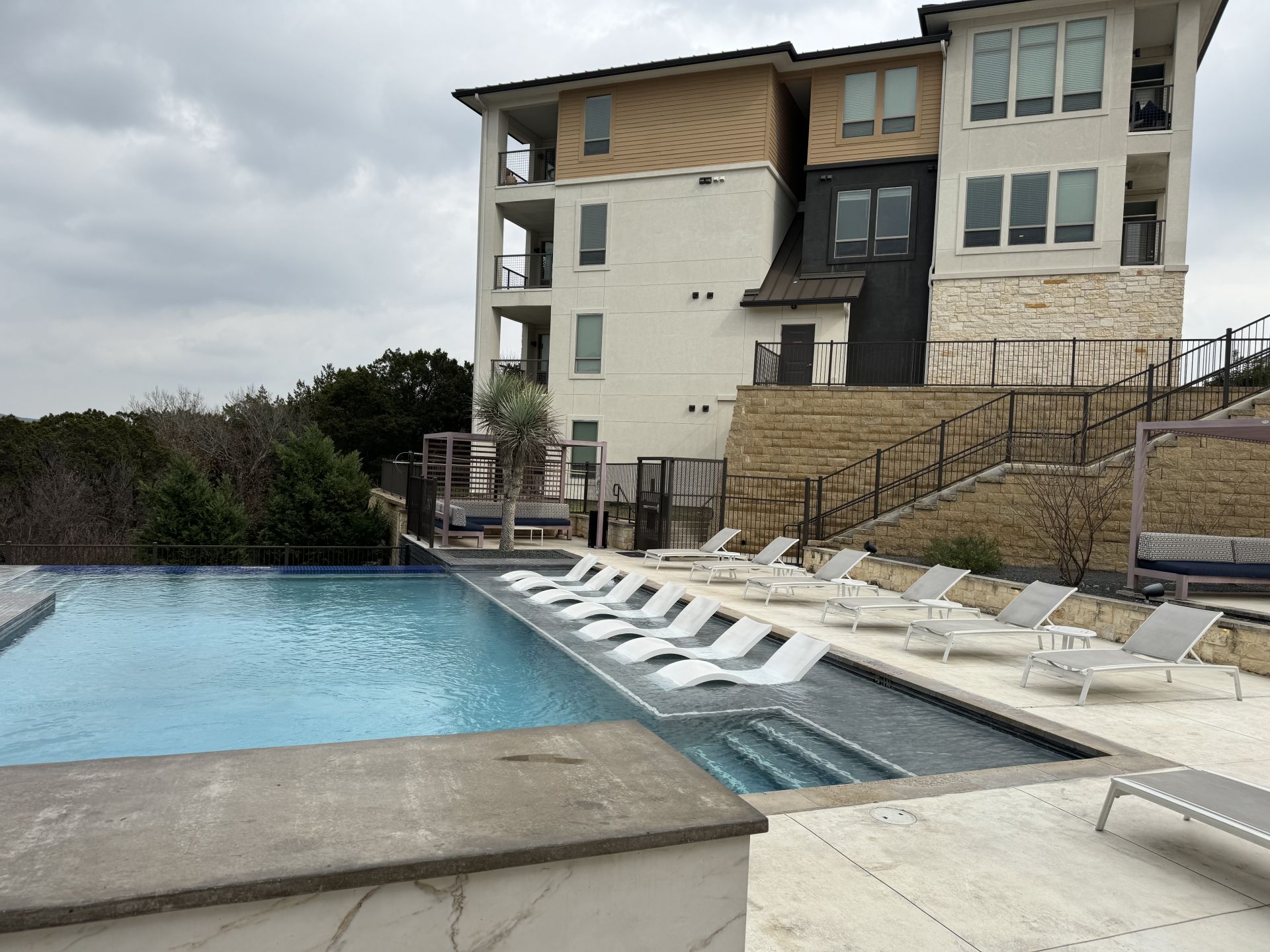
4. Tanning Ledges and Shallow Lounging Areas
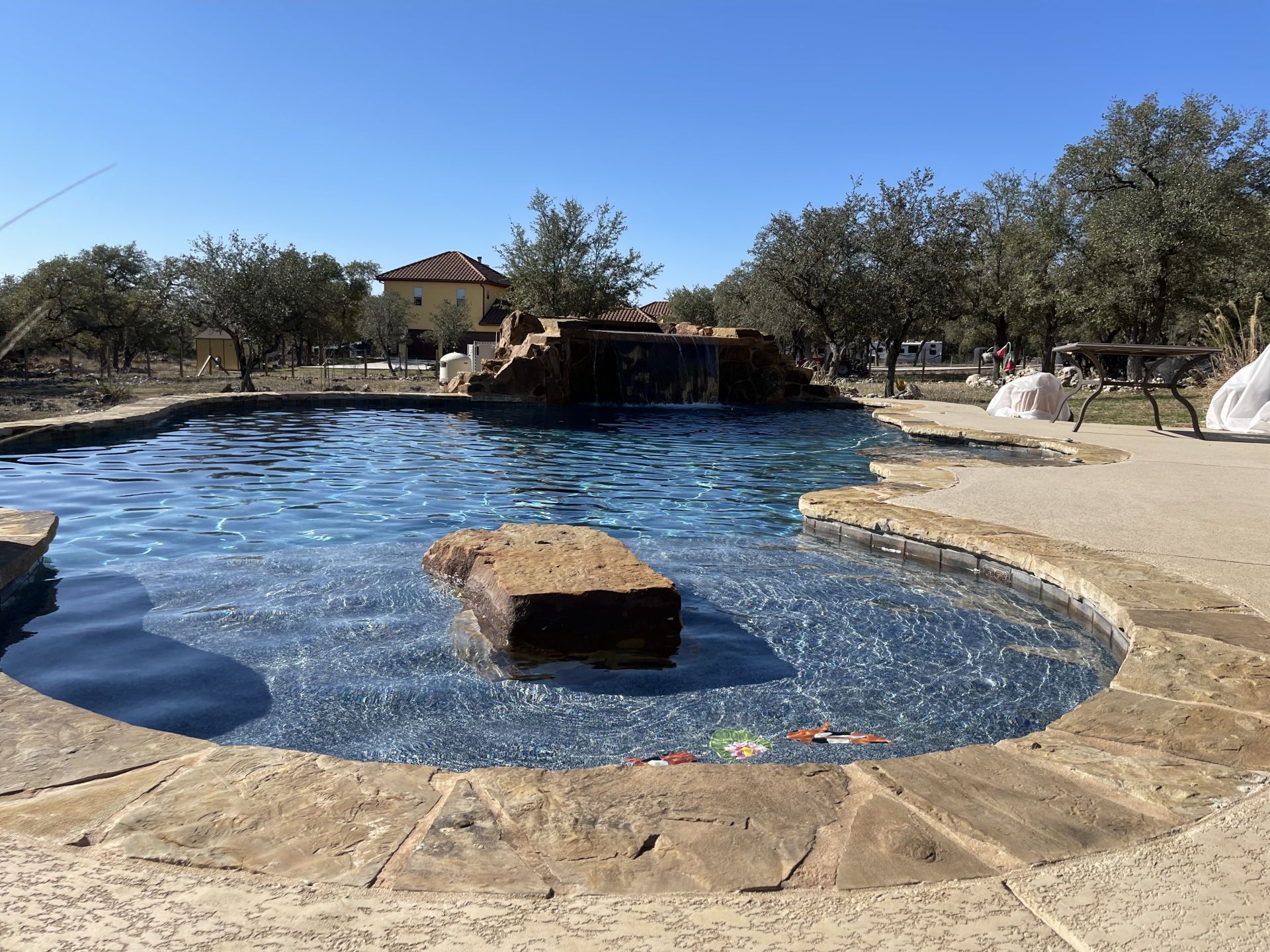
A tanning ledge is a shallow shelf, typically 6 to 12 inches deep, built into the pool’s entry side. It gives you a place to sit with a book and a drink without committing to full depth, and it makes entry safer for kids and older guests. In a compact pool, a ledge can replace a chunk of deck space, which matters when every square foot counts.
5. Water Features and Lighting That Add Depth
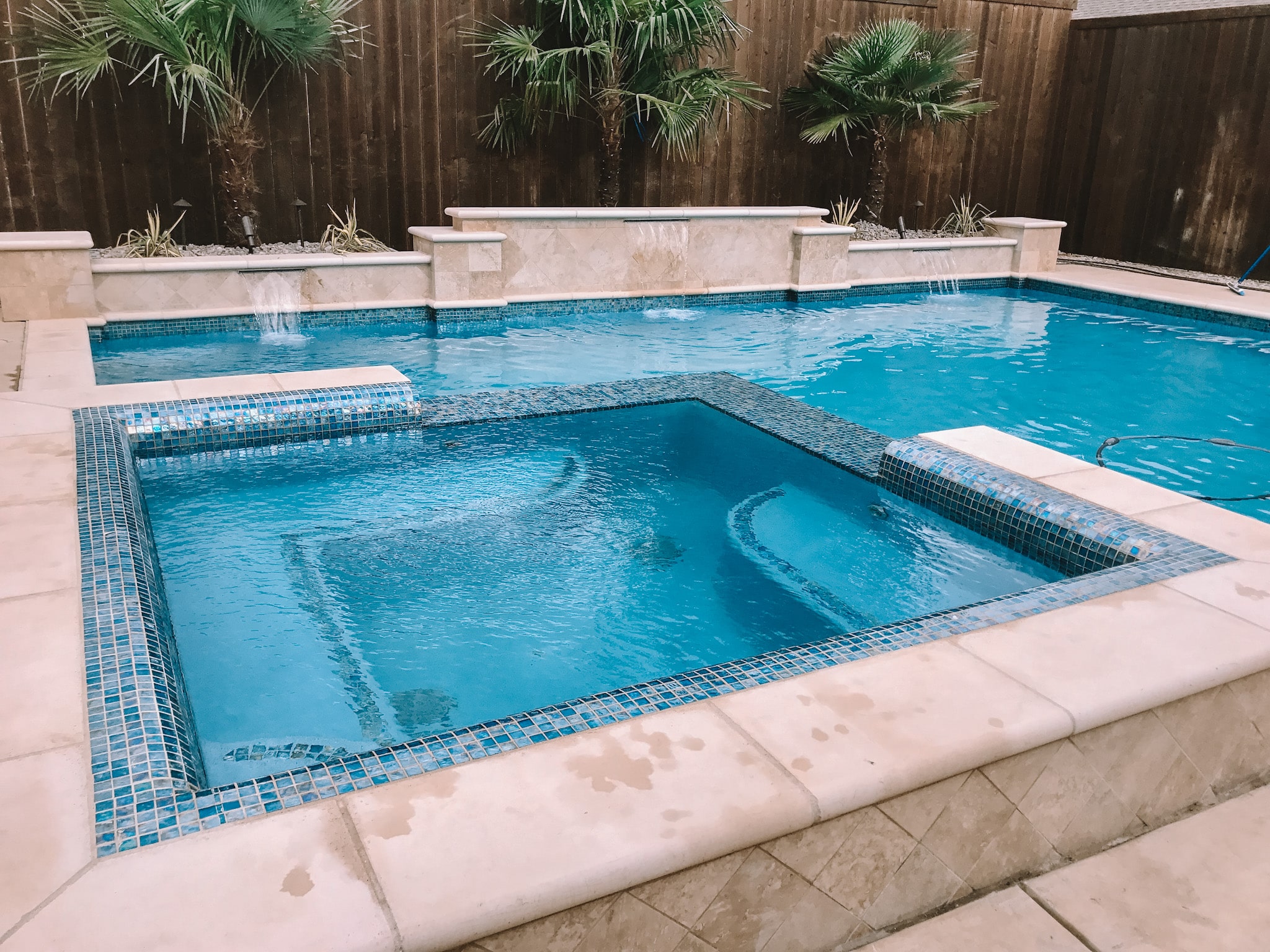
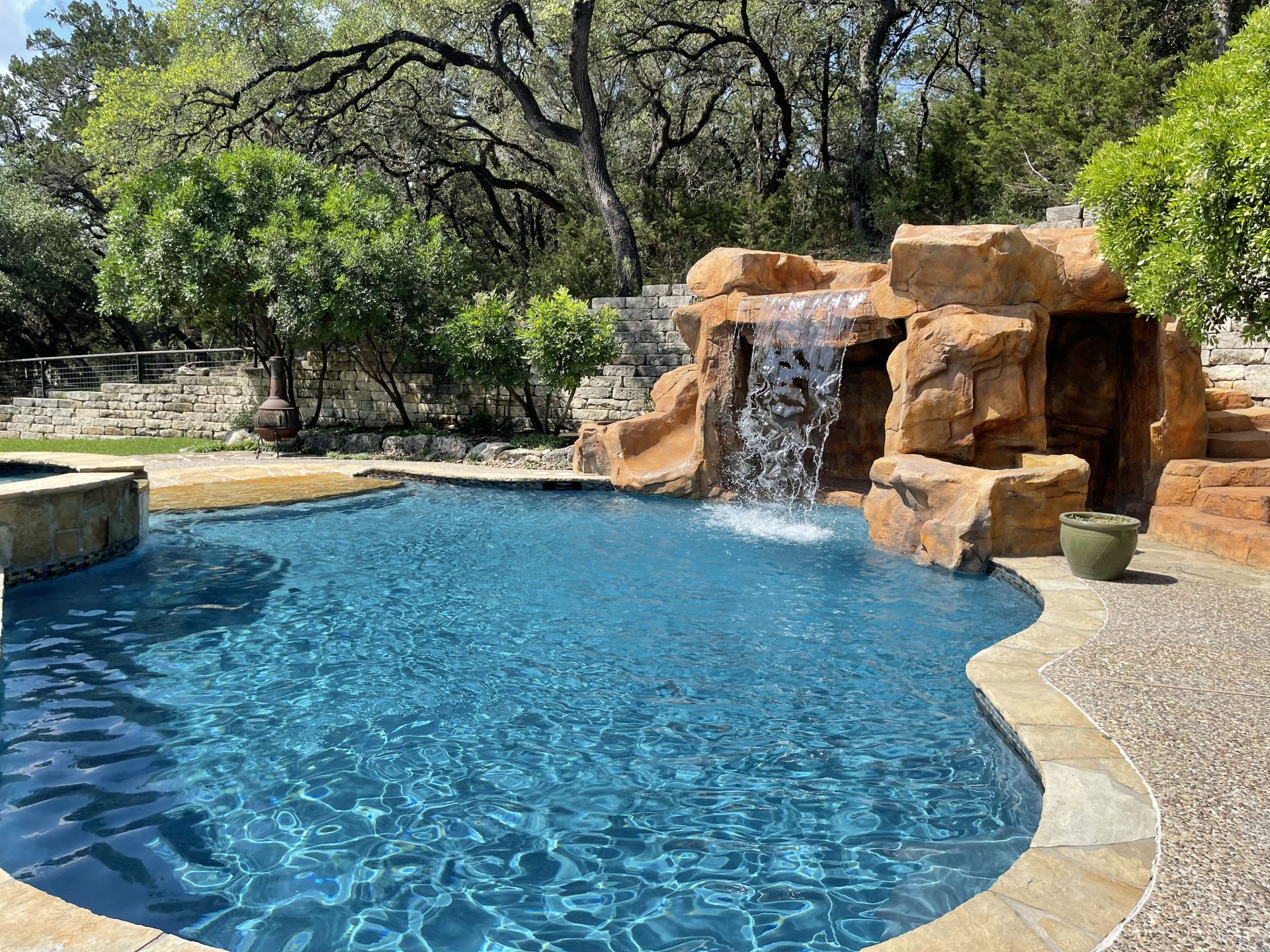
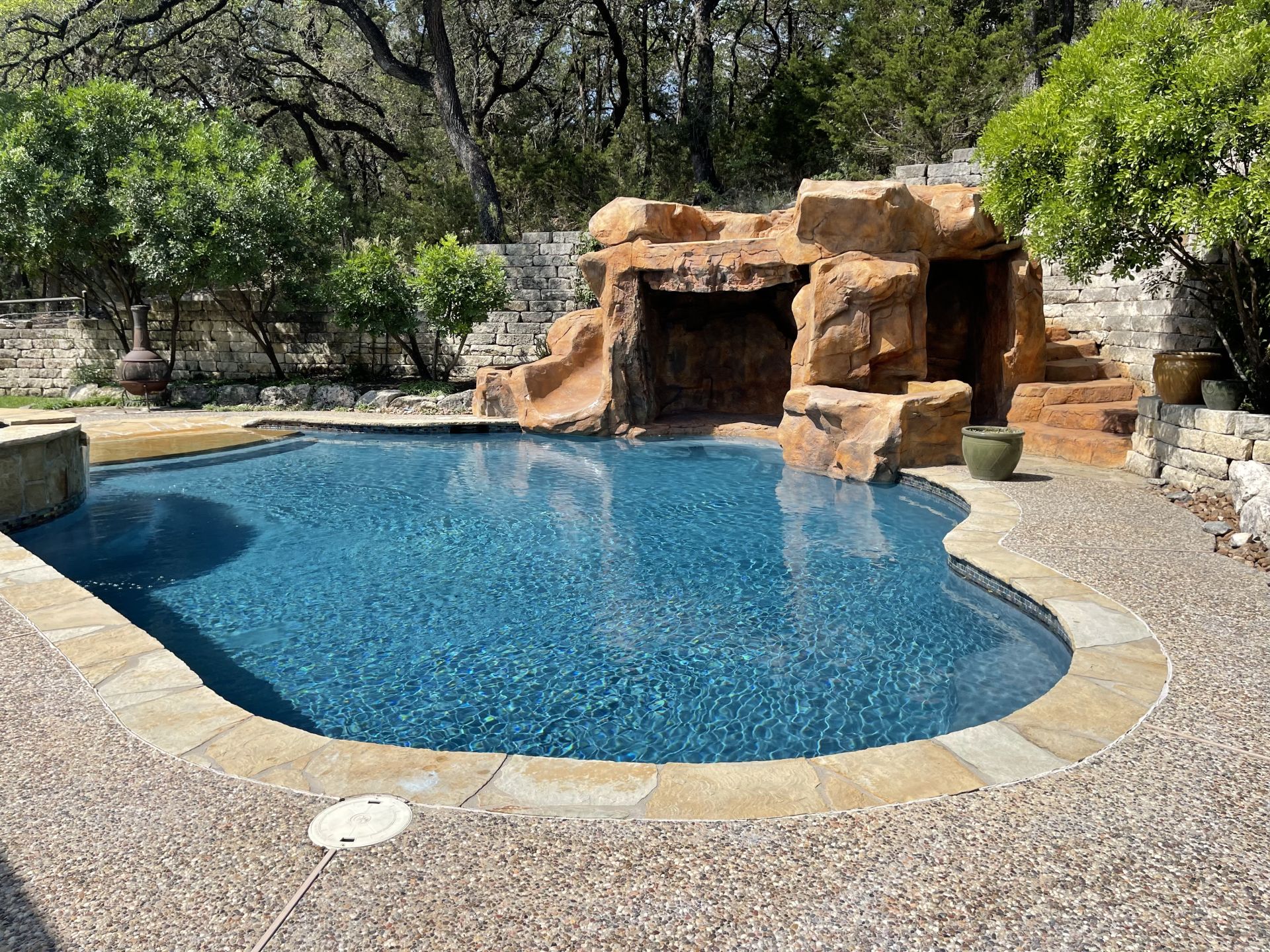
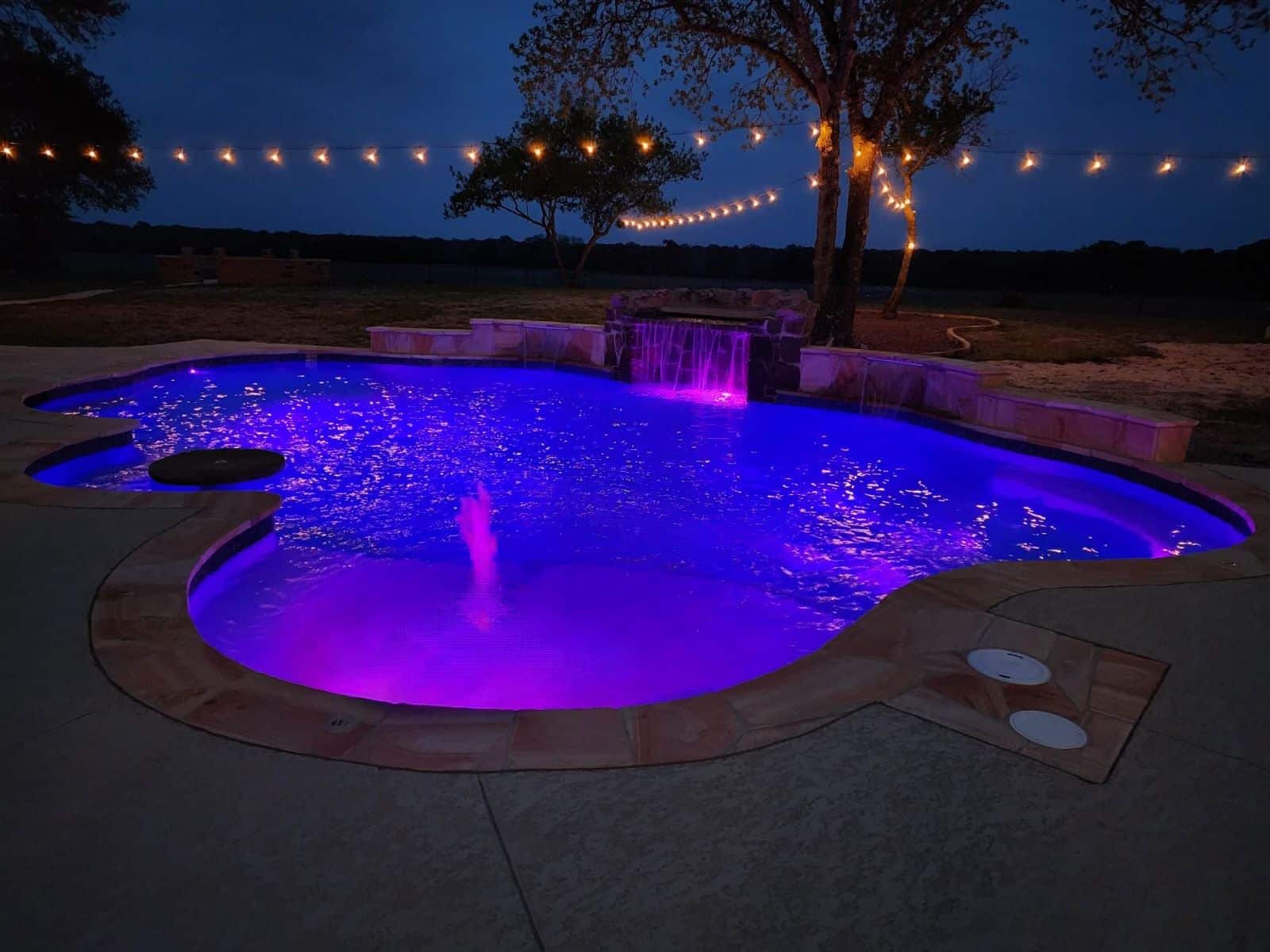
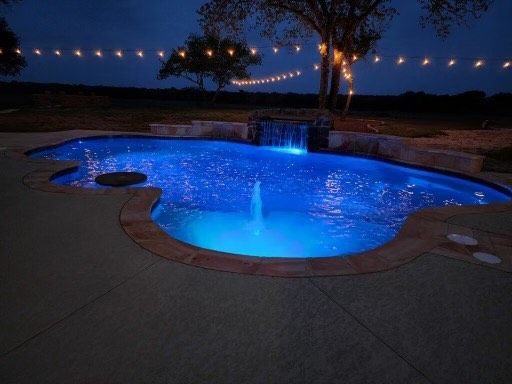
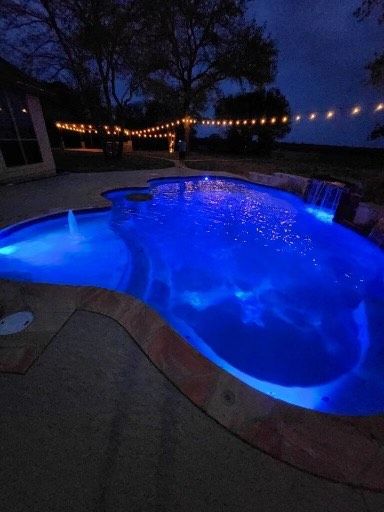
Color-changing lights and a small sheer-descent water feature make a small pool feel larger after dark. Neutral finishes in light tones also help: pale plaster or quartz reflects more light and reads as more water. These are inexpensive upgrades relative to excavation, and they change how the pool feels more than adding two feet of length would.
6. Built-In Seating and Benches
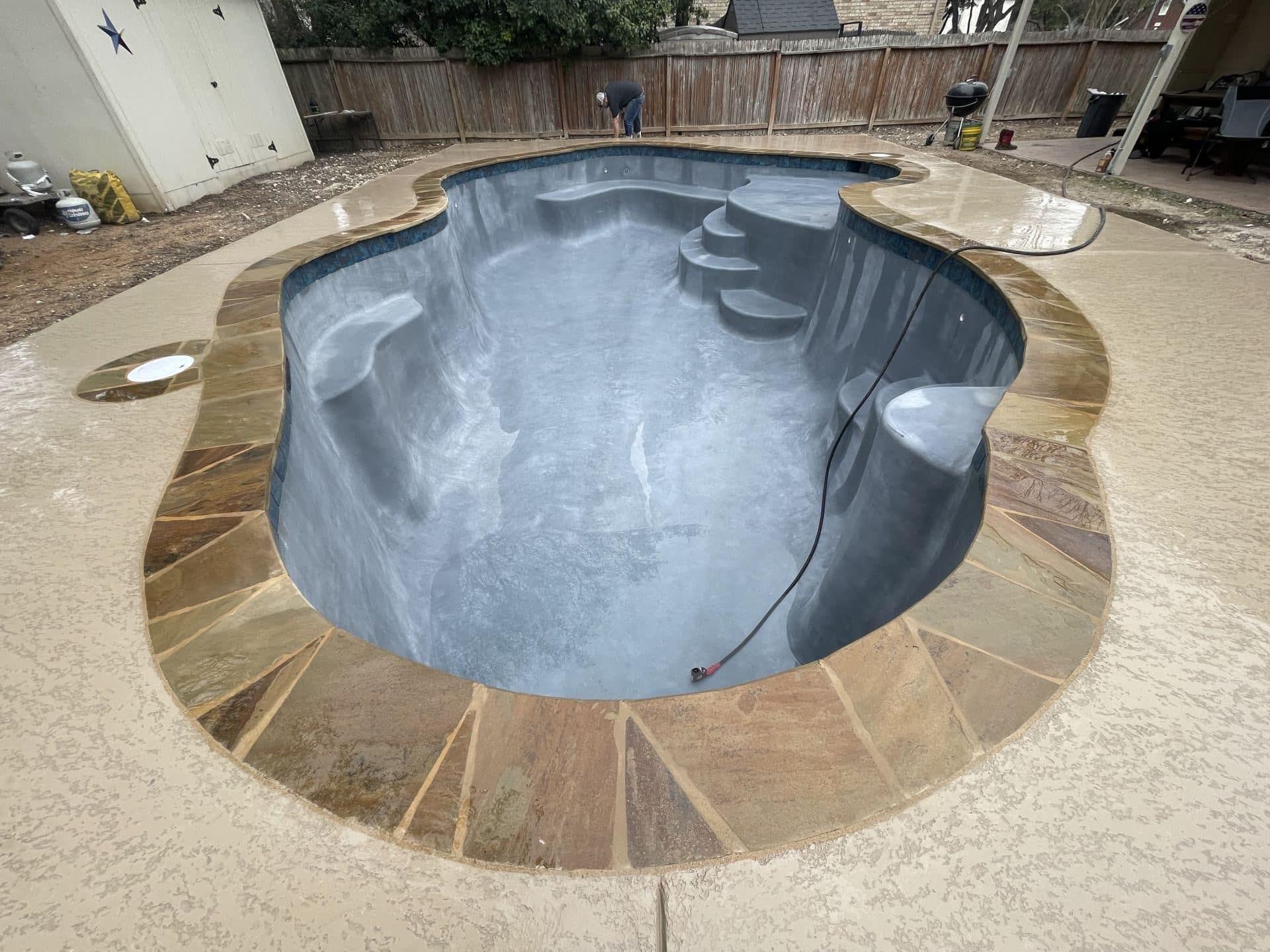
Benches along one or two walls turn a plunge pool into a gathering space. They cost little during construction and are difficult to add later. In a small pool, seating does the job a larger shallow end would do in a big one.
7. Integrated Deck and Landscape Design
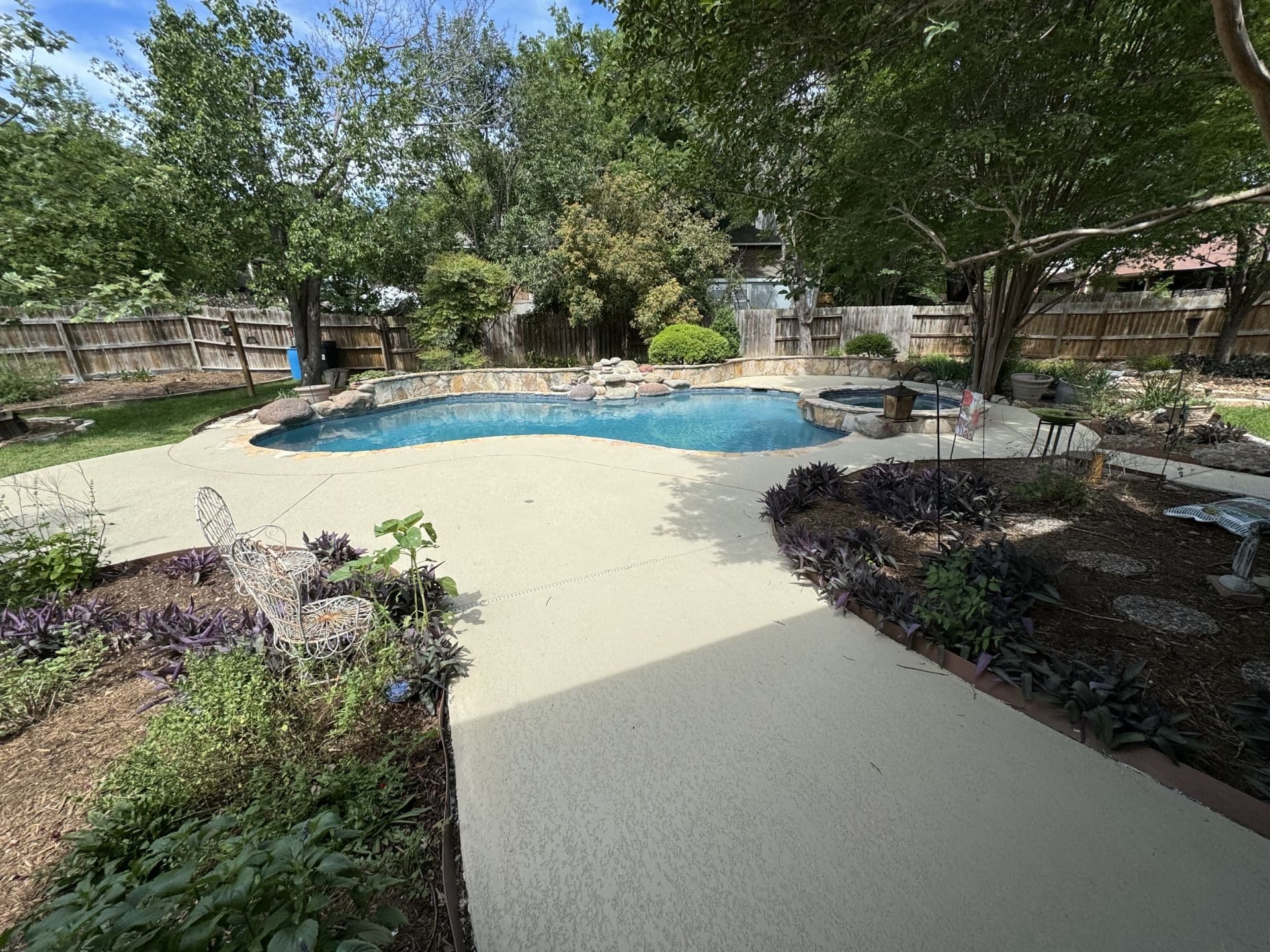
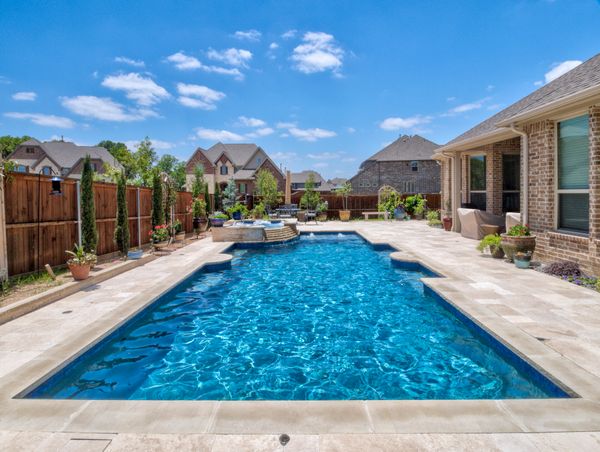
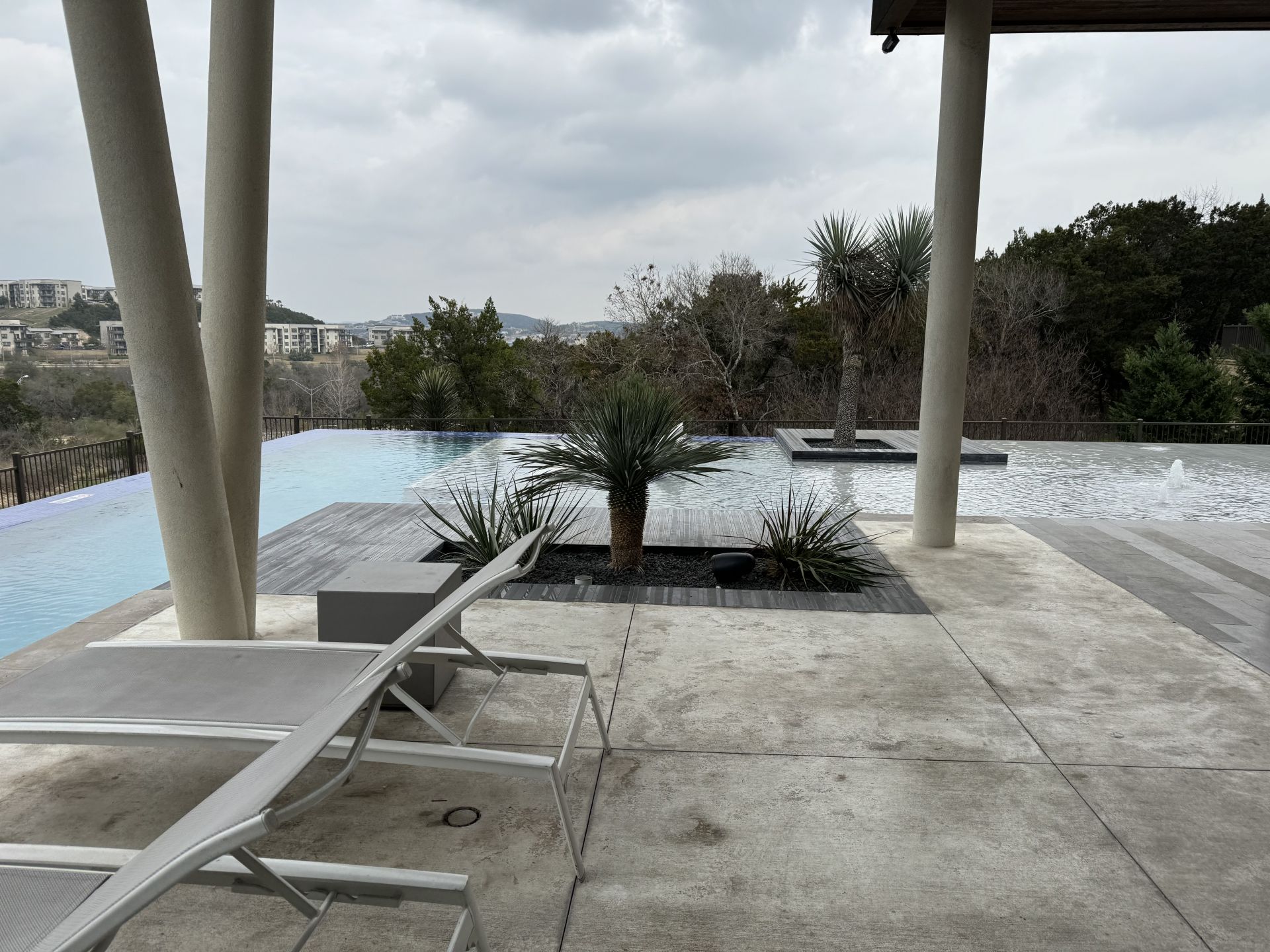
The pool deck is part of the pool. Narrow coping, a compact patio, and vertical planting instead of sprawling flower beds keep the whole composition tight. Hardscaping that flows from the house to the water makes a small backyard feel intentional rather than leftover.
Small Inground Pool Sizes That Fit Real Yards
Small inground pool sizes fall into a few practical bands, and the right one depends on what you want to do in the water, not just what fits on paper.
| Pool Type | Typical Footprint | Best For |
|---|---|---|
| Plunge pool | 8 x 12 ft | Cooling off, small patios |
| Cocktail pool | 10 x 15 ft | Entertaining, seating |
| Compact swim pool | 10 x 20 to 12 x 24 ft | Family swimming |
| Narrow lap pool | 6 x 25 to 40 ft | Exercise, side yards |
| Spool | 10 x 16 ft | Year-round soaking |
Dimensions by intended use:
- Lounging and cooling off. A plunge or cocktail pool in the 8 x 12 to 10 x 15 ft range is enough for standing, sitting on a bench, and a tanning ledge. Depth of roughly 3.5 to 5 ft covers most lounging needs.
- Children’s play. Kids need shallow standing area and sightlines more than length. A compact pool around 10 x 20 ft with a broad shallow end and a tanning ledge works better than a narrow deep pool of the same volume.
- Exercise and lap swimming. A lap pool needs length, not width, typically 6 to 8 ft across and 25 to 40 ft long. A swim spa is the alternative when the yard cannot supply the length; the current does the work of distance.
Measure your setbacks before you fall in love with a dimension. A pool that fits the yard but violates an easement will not get permitted. Beyond setbacks, four site constraints decide feasibility:
- Access. A narrow side gate can stop an excavator from reaching the backyard. If equipment cannot get in, the project may require smaller machines, hand excavation, or a crane, all of which change the budget before a single design decision is made.
- Slope and drainage. A sloping yard may need a retaining wall, grading, or a raised pool wall on the downhill side. Water must drain away from the pool, not into it.
- Soil. Rocky or high-water-table sites raise excavation cost and may require dewatering during construction.
Watch out: designing the pool before checking access, easements, and utility locates is the most common way a small-yard project loses weeks and money.
If you are comparing shell materials, our guide to choosing between vinyl, fiberglass and concrete in-ground pool liners breaks down the trade-offs.
Small Inground Pool Ideas for a Backyard on a Budget
Budget-friendly choices start with the shell and the shape. A smaller pool with a simple geometric outline costs less to excavate, less to finish, and less to run. Skipping elaborate water features and choosing a compact deck keeps the total down without making the pool feel cheap.
Three moves that protect a budget:
- Keep the pool close to the house to reduce plumbing and deck runs
- Choose a simple shape over a complex freeform outline
- Spend on the finish and lighting, not on extra square footage
What Small Inground Pools Cost to Build and Own
A useful breakdown starts with the individual cost components: a small inground pool is a stack of separate line items, and each one moves independently.
The installed cost of a small pool typically splits into these components:
- Excavation and site prep. Digging, hauling off spoil, and shoring up access. Tight side yards and slopes raise this line because equipment may need to be smaller, hand-digging may be required, or a crane may be needed to lift a shell over the house.
- Shell and structure. A vinyl liner pool uses a panel or poured wall system with a liner; fiberglass arrives as a molded shell; concrete is shot or poured on site and finished with plaster, quartz, or pebble. Material choice is the single biggest swing in the shell line.
- Plumbing and equipment. Pump, filter, heater, skimmer, returns, main drain, and the electrical run to the pad. A heat pump or gas heater adds cost but extends the season.
A common pattern is that two yards with the same pool dimensions price very differently because of access, soil, and utility conflicts, not because one builder is cheaper. That is why a written, itemized quote is the most reliable basis for comparison.
Ongoing ownership is the other half of the budget, and it is where small pools quietly win. Recurring costs generally fall into four buckets:
- Chemicals. Chlorine or salt system consumables scale with water volume, so a plunge pool or spool costs meaningfully less per month than a full-size pool.
- Electricity. The pump is the main draw. Variable-speed pumps cost more upfront and less to run, and they are the standard recommendation for small pools because the flow demand is low.
- Heating. A heat pump or gas heater on a small pool heats faster and holds temperature with less energy than on a large one; a spa you can heat independently is the most efficient way to extend the season.
For a fuller breakdown of the variables that move the number, read our guide on how much it costs to build a pool. Pricing depends on your site, your finish choices, and your equipment package.
Small Pool With Spa Ideas for Year-Round Use
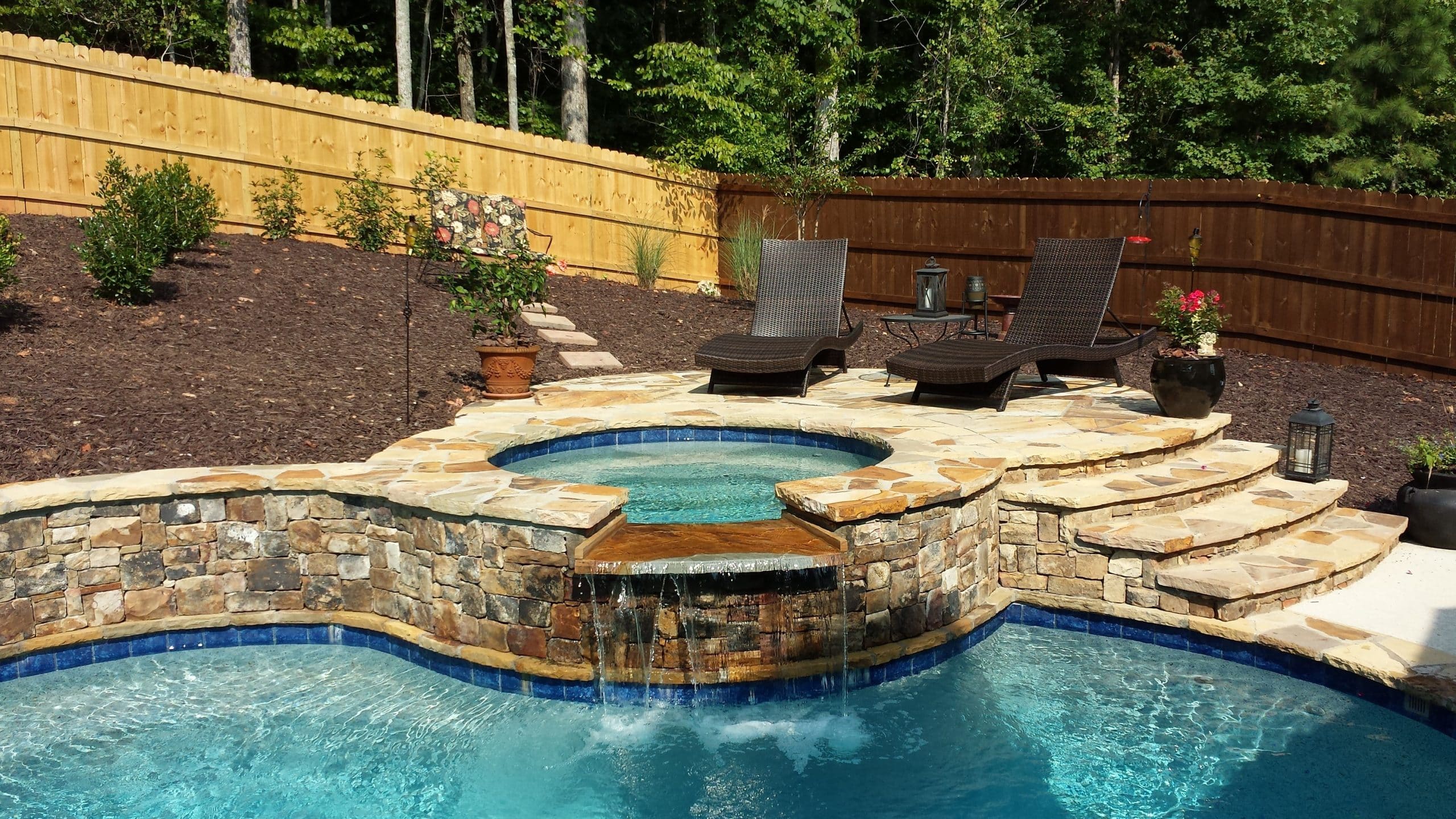
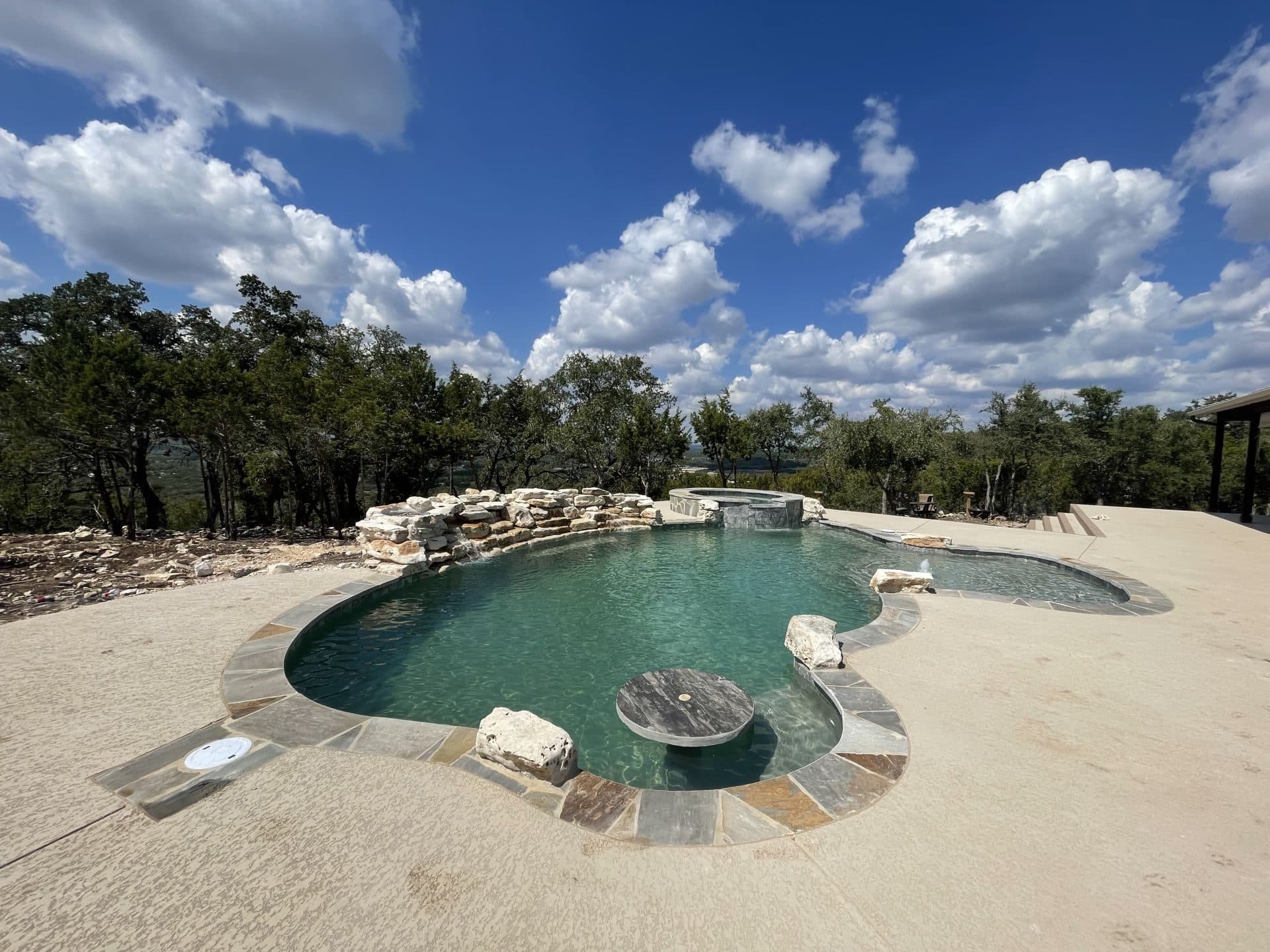
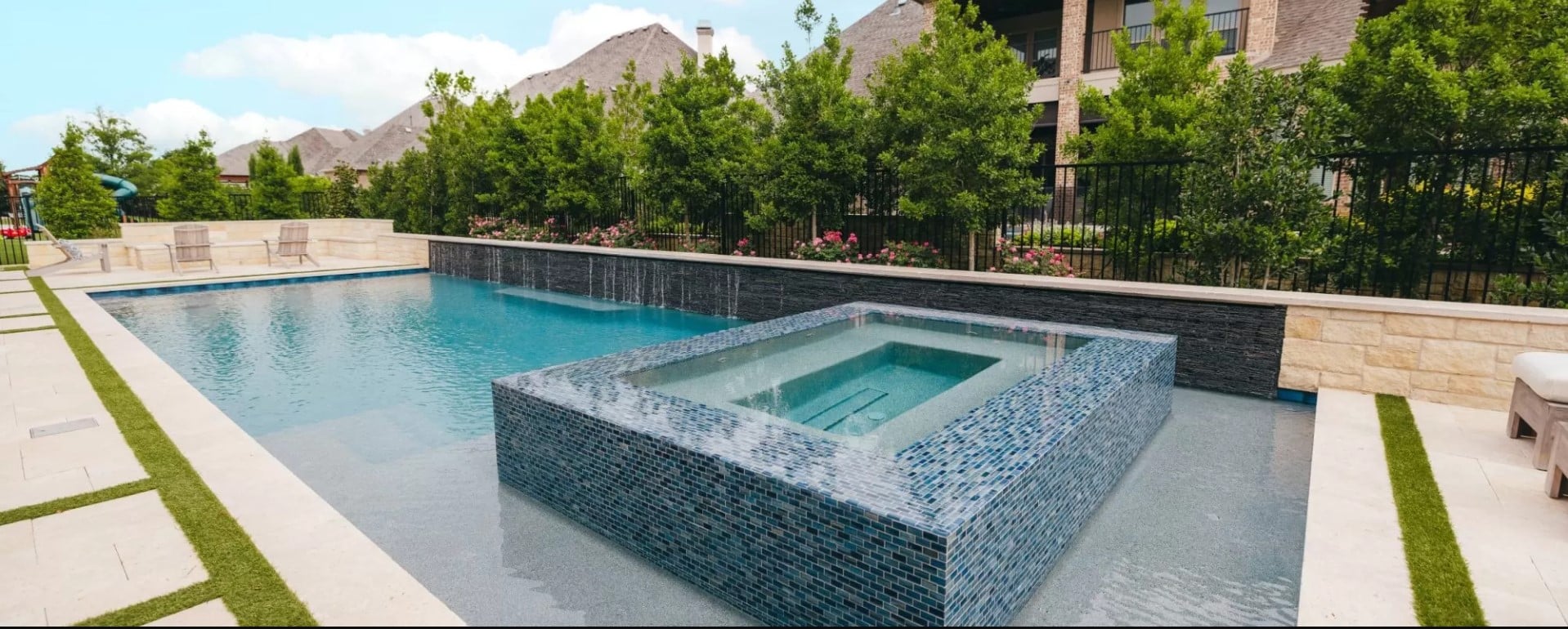
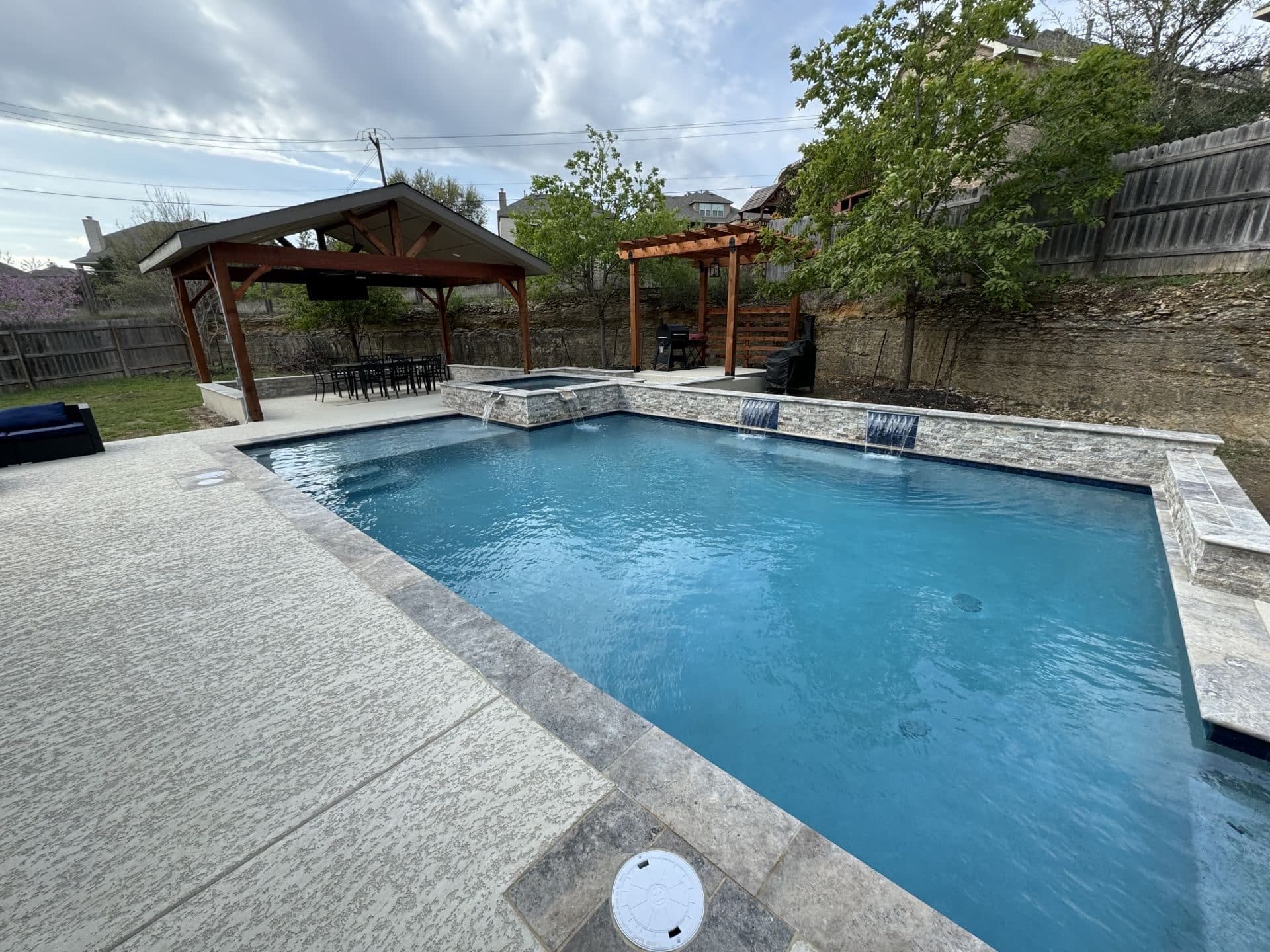
A small pool with spa ideas usually center on one of two builds: an attached spa that shares the pool’s equipment, or a spool that combines both in a single shell. An attached spa lets you heat a small body of water separately, which keeps energy use down in cooler months. A spool is the more space-efficient option when the yard cannot hold two separate structures.
Consider how you will use the water in winter. A spa you can heat independently gets used far more than a pool you drain and cover. If you want to see what a combined build looks like, browse our spas and hot tubs options before you settle on a layout.
Setbacks, Permits, and Site Constraints to Plan For
Setbacks, easements, and permits are where small-yard projects succeed or stall. Most jurisdictions require a minimum distance between the pool edge and property lines, and utility easements can rule out a corner you assumed was usable.
Site access matters just as much. A narrow side gate can stop an excavator from reaching the backyard, which changes the whole plan. Watch out: designing a pool before checking access and easements is the most common way a small-yard project loses weeks and money.
Planning Your Small Inground Pool With Sanchez Pools Inc
The best small inground pool ideas only work when they are built around your actual yard, not a catalog photo. At Sanchez Pools Inc, we have been family owned and operated since 1987, Our team handles new construction, remodeling, and equipment work.
To see how we build, review our pool building process, and when you are ready to start, explore new pool construction with us.
Frequently Asked Questions
How much does a small inground pool cost in the United States?
Pricing depends on pool type, finish, site conditions, and equipment, so Sanchez Pools Inc provides a written quote after reviewing your yard, access, and design goals. Contact the company for current pricing.
What is the smallest inground pool size that still works for swimming?
For many small yards, a 10-by-20-foot to 12-by-24-foot pool gives enough length to swim a few strokes. When space is tighter, an 8-by-12-foot to 10-by-16-foot plunge pool still supports lounging, cooling off, and play. A lap pool needs more length than width, so measure your longest open run first. A builder can confirm what fits after checking setbacks and equipment access.
Can you add a spa to a small inground pool?
Yes. A spool combines a small pool and a spa in one compact footprint, and an attached spa can share the same equipment pad and plumbing. The trade-off is water volume: a spa takes up part of the pool shell, so decide whether you want more swim space or more seating. Heated spillover spas add year-round use, but they raise energy costs, so ask about pump sizing and covers.
How can I make a small backyard pool look bigger?
Neutral pool finishes and light coping reflect more light and reduce visual weight. Extending decking to the property line, using one material throughout, and adding color-changing lights keeps the eye moving. A tanning ledge or shallow lounging area adds usable space without enlarging the shell. Keep landscaping low and layered so plants frame the pool instead of crowding it.
A tight backyard does not limit what a pool can be. It simply asks for a smarter design, and that starts with a conversation about your space, your budget, and how you want to use the water. Get started with Sanchez Pools Inc and turn your compact yard into a pool you will actually use. Call 210-732-5202 to schedule a consultation.